South Africa Withdraws AI Policy After Fabricated Citations Expose Governance Crisis
Minister pulls draft regulation following discovery of AI-generated phantom references, opening debate on who controls technology governance in emerging markets.
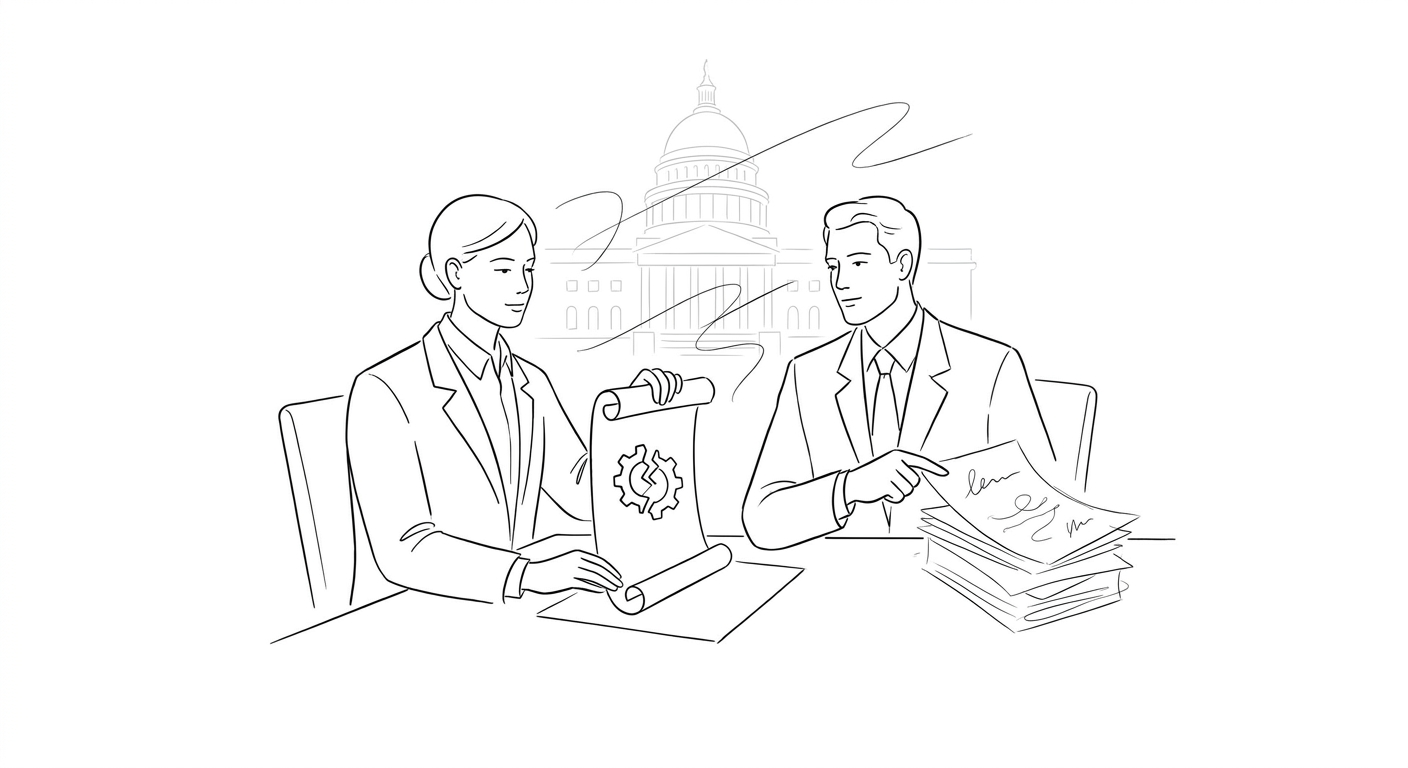
South Africa's Minister of Communications and Digital Technologies withdrew the country's draft national AI policy in late April after the 86-page document was found to contain fabricated academic citations—apparent hallucinations generated by AI tools themselves.
At least six of 67 references in the policy draft, released April 9 with a June 10 submission deadline, did not exist. The South African Journal of Philosophy confirmed that works attributed to it were phantom entries, according to IOL reporting. The episode has ignited questions about whether governments are equipped to regulate technologies they may not fully understand or control.
The withdrawal creates an opening for civil society and alternative voices to shape the debate, but the incident also exposes deeper tensions. The draft policy had referenced AI's deployment in conflict zones, including facial recognition and targeting systems used in Gaza and the West Bank, noting that such technologies are often marketed internationally as "battle-tested." Some of those systems are already operational in South Africa, raising concerns about surveillance without consent.
Meanwhile, political momentum against AI is building across multiple jurisdictions. In the United States, former White House officials warn that AI companies are investing billions in development but almost nothing in public communication, turning the technology into a political liability. Governors in both red and blue states are positioning themselves as anti-AI, with operatives suggesting that candidates eyeing the 2028 election cycle are already distinguishing themselves from pro-AI figures.
In Washington, AI industry CEOs made last-minute calls to President Trump to block a planned executive order on AI oversight, citing concerns about overregulation and competition with China. The administration postponed the signing, and bipartisan House negotiations over preemption of state AI laws have drawn concern from New York legislators and AI safety advocates alike.
(The South African policy withdrawal follows a pattern of governments struggling to balance innovation incentives with public accountability, particularly in jurisdictions where regulatory capacity lags behind technology adoption.)
The South Africa case underscores a broader governance dilemma: as AI tools become embedded in policymaking itself, the line between regulator and regulated blurs. The use of AI to draft AI policy—without adequate verification—raises questions about institutional integrity and the risk of circular logic in rule-making. The incident also highlights the asymmetry between well-resourced technology firms and under-resourced government agencies in emerging markets, where the stakes of getting regulation wrong are often higher.
Keywords
Sources
https://iol.co.za/technology/opinion/2026-05-05-south-africas-ai-policy-now-is-the-time-to-raise-our-concerns/
Focuses on fabricated academic references in draft policy and surveillance technology deployment in South Africa
https://www.newsweek.com/ai-communication-crisis-turns-tech-into-political-liability-opinion-11969173
Former White House staffer warns AI has become political liability due to industry's failure to communicate benefits
https://www.washingtonpost.com/wp-intelligence/ai-tech-brief/2026/05/22/ai-tech-brief-tech-ceos-blocked-executive-order/
Reports industry CEOs lobbied Trump to block AI executive order; concerns over state law preemption negotiations
https://www.washingtonpost.com/wp-intelligence/ai-tech-brief/2026/05/21/ai-tech-brief-white-house-ai-order-now-postponed/
Covers Trump's postponement of AI executive order citing overregulation and China competition concerns