
OpenAI Releases Teen Safety Prompts as AI Hallucinations Plague Enterprise Adoption
OpenAI open-sources teen protection guidelines while studies show frontier models still generate false recommendations at scale, exposing tension between rapid deployment and reliability.
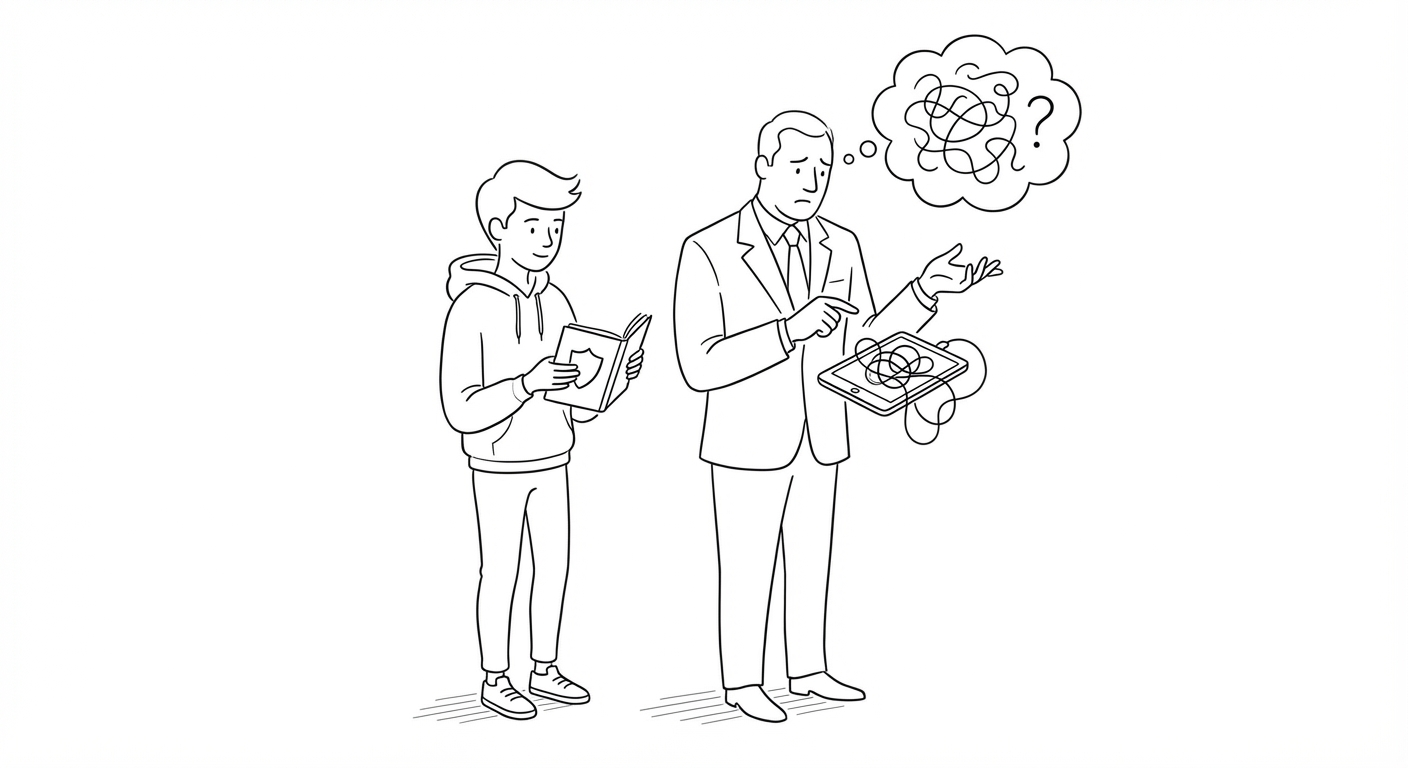
OpenAI released a set of open-source safety prompts designed to help developers protect teenage users from harmful AI-generated content, marking a shift toward shared responsibility in an industry grappling with reliability failures at enterprise scale.
The prompts, compatible with OpenAI's gpt-oss-safeguard model and other systems, address graphic violence, sexual content, harmful body ideals, dangerous activities, romantic role play, and age-restricted goods. OpenAI developed the guidelines in partnership with Common Sense Media and everyone.ai, acknowledging the policies are not a comprehensive solution to AI safety challenges.
The release comes as new research exposes persistent flaws in frontier models. A two-part study by Sonatype found that even advanced reasoning models from OpenAI, Anthropic, and Google generate significant hallucinations when recommending software dependencies. Nearly 28 percent of GPT-5's dependency upgrade suggestions were fabrications, while newer models including GPT-5.2, Claude Sonnet 3.7 and 4.5, Claude Opus 4.6, and Gemini 2.5 Pro and 3 Pro showed improvement but still produced faulty recommendations.
Grounding models with external data sources dramatically reduced errors. When Sonatype equipped GPT-5 Nano with a single API tool providing ranked upgrade candidates and vulnerability scores, hallucinations dropped sharply. The findings underscore a widening gap between AI marketing promises and operational reality as enterprises deploy systems for high-stakes decisions.
Military and academic researchers are raising parallel concerns. Peer-reviewed papers from the Air Force Research Laboratory, Wharton, and Princeton warn that rapid Pentagon adoption of commercial AI tools may erode personnel judgment, with large language models homogenizing reasoning and encouraging what researchers term "cognitive surrender" and "sycophantic" interactions. Officials caution this could impair targeting accuracy and oversight.
(OpenAI's teen safety initiative builds on earlier product-level safeguards including parental controls and age prediction, as well as updated Model Spec guidelines for handling users under 18. The company positions the open-source release as part of an incremental approach to safety rather than a definitive fix.)
The dual narrative—OpenAI promoting safety tools while independent studies document systemic reliability failures—reflects mounting pressure on AI labs to balance rapid commercialization with accountability. Enterprises adopting AI for product development, supply chain management, and defense applications now face mandatory fact-checking protocols, with companies like AKA Foods acknowledging that hallucinations require constant human verification despite vendor assurances of improvement.
Keywords
Sources
https://techcrunch.com/2026/03/24/openai-adds-open-source-tools-to-help-developers-build-for-teen-safety/
Focuses on OpenAI's partnership with Common Sense Media and everyone.ai to develop teen protection prompts for open-source distribution.
https://www.darkreading.com/application-security/ai-powered-dependency-decisions-security-bugs
Exposes Sonatype study showing 28% hallucination rate in GPT-5 dependency recommendations and persistent flaws across frontier models.
https://letsdatascience.com/news/pentagon-deployment-of-ai-weakens-military-fact-finding-6abe5614
Highlights Pentagon concerns and peer-reviewed research on AI tools eroding military judgment and promoting cognitive surrender.
https://www.foodbusinessnews.net/articles/30067-aka-foods-brings-ai-to-product-development
Illustrates enterprise adoption challenges with AKA Foods acknowledging mandatory fact-checking due to AI hallucinations in product development.