
Nvidia and LVMH Heir Back Physics-Based Virtual Try-On as Fashion Bets on AI
Chipmaker Nvidia partners with startup Catches to launch RealFit, a platform using physics simulation to improve digital garment fitting, as luxury and retail sectors seek practical AI applications.
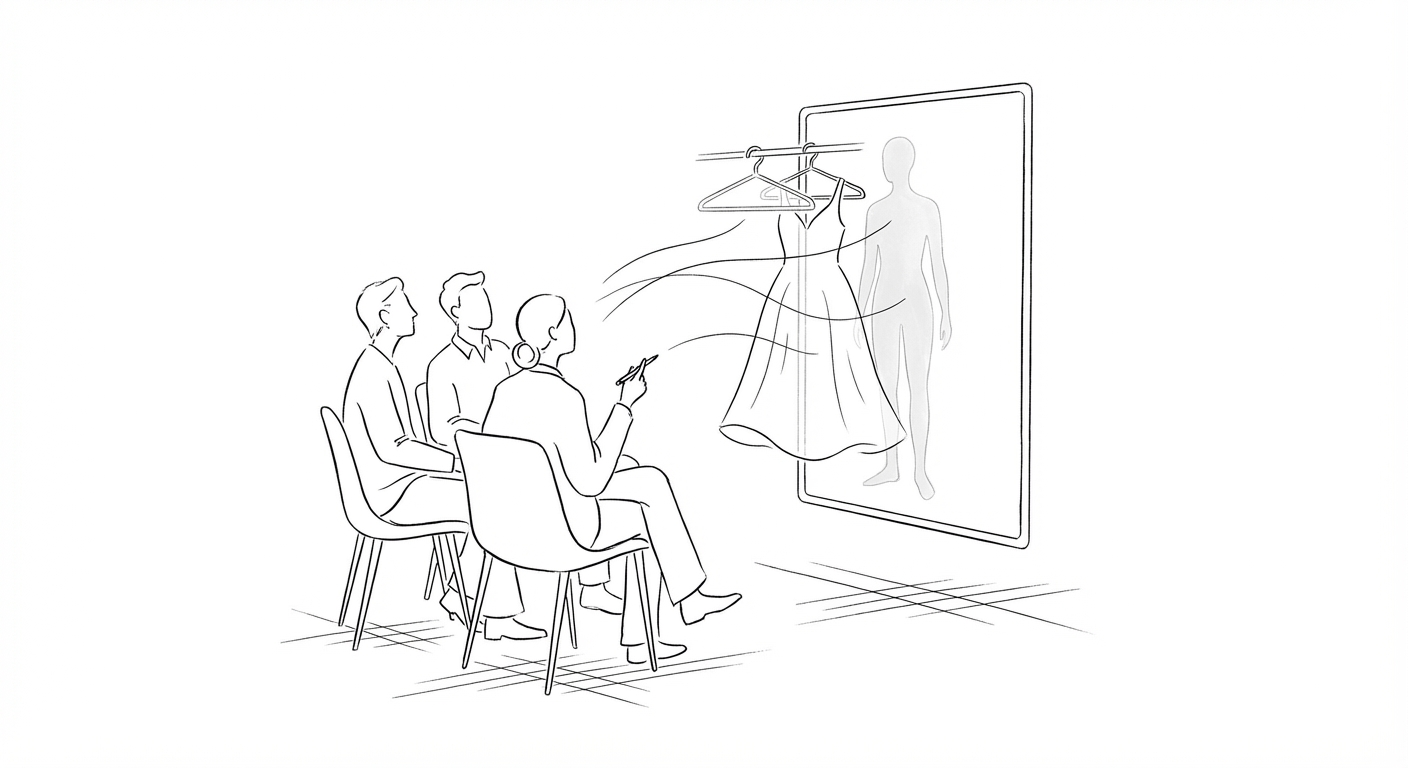
Nvidia announced a partnership with fashion technology startup Catches to launch RealFit, a new virtual try-on platform that uses physics-based simulation to create more realistic digital garment fitting experiences. The collaboration, unveiled at Nvidia's GTC conference, represents a significant bet by the AI chipmaker on practical consumer-facing applications beyond its core enterprise and data center business.
Antoine Arnault, heir to the LVMH luxury empire, is backing the venture alongside Nvidia, signaling growing interest from fashion's power brokers in AI-driven shopping tools. The platform aims to address longstanding skepticism about virtual try-on technology by incorporating physics engines that model how fabrics drape, stretch, and interact with different body types—a technical leap enabled by open-sourced large language models that have made realistic image generation more accessible.
The fashion industry has struggled for years to make virtual try-on compelling enough for mass adoption. Despite technological advances, consumer uptake has remained tepid, with shoppers often preferring traditional e-commerce photography or in-store experiences. RealFit's physics-based approach attempts to overcome the uncanny valley problem that has plagued earlier iterations, which frequently produced flat or unrealistic renderings.
(Catches has raised capital as part of a cohort of 17 AI-powered fashion startups that have collectively secured more than $400 million in funding over the past five years, according to industry analysis. These ventures span design automation, supply chain optimization, and personalized shopping experiences.)
The timing coincides with broader industry momentum around AI-enabled commerce. Direct checkout integration in AI search engines like ChatGPT has been characterized as the most significant innovation in online shopping in over a decade, forcing brands and retailers to reconsider their digital strategies. Virtual try-on technology, if it achieves meaningful consumer adoption, could reduce return rates—a persistent cost burden for fashion retailers—while improving conversion rates for online purchases.
Nvidia's involvement extends beyond capital. The company's GPU infrastructure and AI development tools provide the computational backbone for rendering complex physics simulations in real time, a technical requirement for convincing virtual try-on experiences. The partnership positions Nvidia to capture value from consumer AI applications as it seeks to diversify revenue streams beyond its dominant position in enterprise AI infrastructure.
The fashion sector's embrace of AI tools comes as luxury conglomerates restructure to pool resources and shield underperforming brands from investor scrutiny. Kering recently unveiled a new jewelry division consolidating four brands, while also merging fashion brand reporting to reduce transparency around individual label performance—moves that reflect pressure to demonstrate operational efficiency and innovation in a challenging retail environment.
Keywords
Sources
https://www.businessoffashion.com/articles/technology/nvidia-antoine-arnault-bet-on-virtual-try-on/
Exclusive coverage of Nvidia-Catches partnership and Antoine Arnault's backing, with context on fashion AI startup funding landscape
https://www.ynetnews.com/business/article/hk1133mqq11g
Focus on AI security challenges with Onyx Security launch, highlighting risks of autonomous AI systems in enterprise environments
https://www.reuters.com/video/watch/idRW289111032026RP1/?chan=technology
Broader technology sector coverage including Nvidia market expectations and AI industry developments across multiple verticals
https://nerdbot.com/2026/03/11/top-ai-hr-and-elearning-tools-to-boost-workforce-productivity/
Consumer technology perspective on AI tools and productivity applications across various use cases
https://www.securityweek.com/quantro-security-emerges-from-stealth-with-2-5-million-in-funding/