
Neuroscientist Proposes Uncertainty-First Learning to Reshape AI Training
RIKEN researcher argues machines must learn to quantify uncertainty before processing data, challenging dominant paradigms in neural network design.
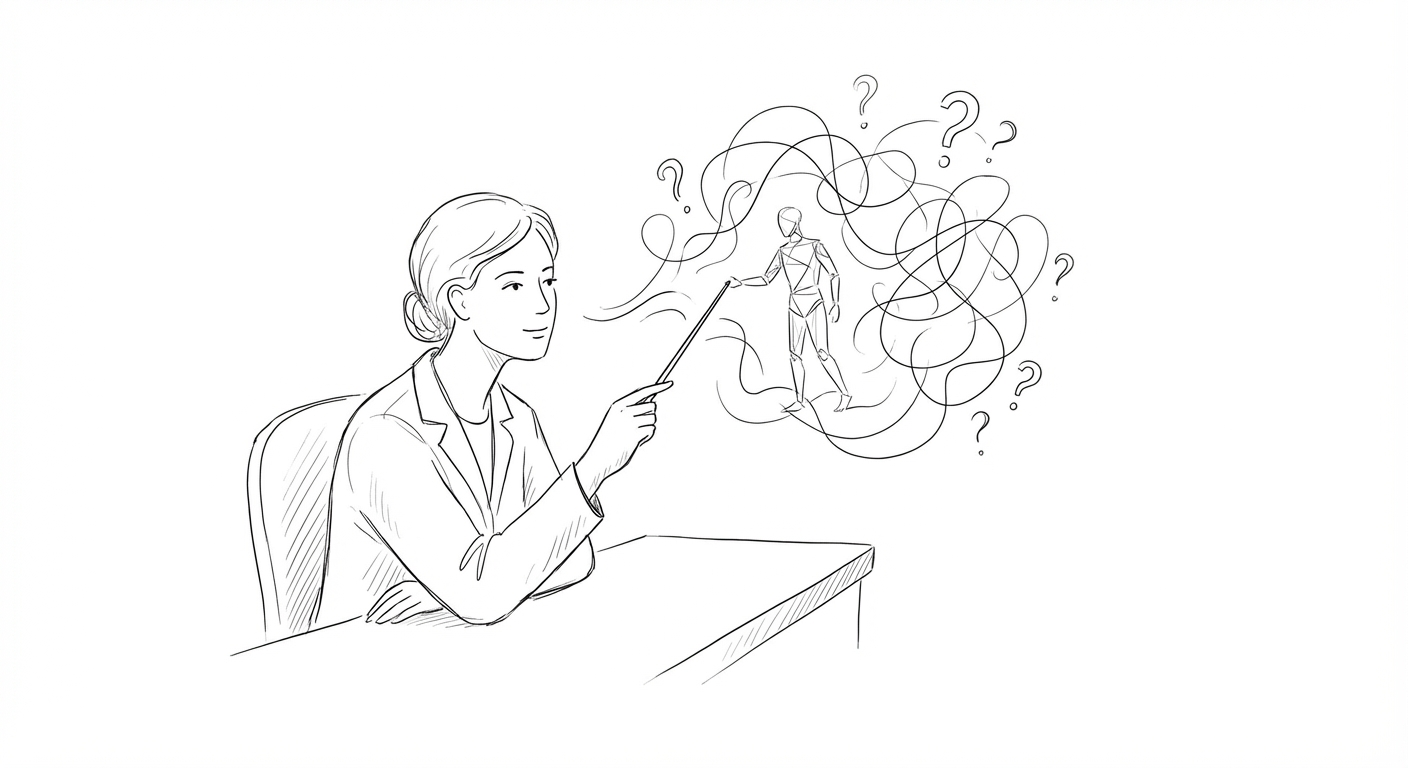
A neuroscientist at Japan's RIKEN Center for Brain Science has published research arguing that artificial intelligence systems should learn to represent uncertainty before they learn from data, inverting a core assumption in contemporary machine learning.
Takuya Isomura's paper in Nature Machine Intelligence proposes that neural networks must first develop mechanisms to quantify what they do not know—a capability he argues is foundational to how biological brains process information. The work draws on neuroscience research showing that mammalian neurons establish uncertainty frameworks during early development, before sensory learning begins.
The research challenges the dominant approach in deep learning, where models are trained to extract patterns from massive datasets without explicit mechanisms for representing epistemic uncertainty. Isomura's framework suggests this sequence may be backwards, potentially explaining why current AI systems struggle with out-of-distribution data and exhibit brittle generalization.
The paper references recent work on neural development showing that cortical circuits in mammals establish variability and noise-handling mechanisms before they encode specific sensory information. Isomura argues this biological precedent should inform architectural choices in artificial systems, particularly as models scale and encounter increasingly diverse data.
(The research was published as a solo-author paper with no disclosed industry funding or commercial partnerships, and Isomura declared no competing interests.)
The proposal arrives as the AI industry grapples with reliability challenges in deployed systems, where models trained on curated datasets frequently fail when confronted with novel inputs. Uncertainty quantification has emerged as a critical research area, but most approaches treat it as a post-hoc addition rather than a foundational design principle.
Isomura's work intersects with ongoing debates about whether scaling alone can produce robust intelligence, or whether architectural innovations inspired by neuroscience offer a complementary path. The paper does not propose a specific implementation but frames uncertainty-first learning as a theoretical principle that could guide future model design.
Keywords
Sources
https://www.nature.com/articles/s42256-026-01205-z
Publishes theoretical framework linking biological uncertainty mechanisms to AI design principles