
Meta Builds Dedicated Hardware Unit for AI Agents Inside Superintelligence Labs
The social media giant hired veteran engineer Rui Xu to lead a new hardware team exploring AI-native devices beyond smart glasses, signaling a strategic shift toward personalized, cross-device agents.
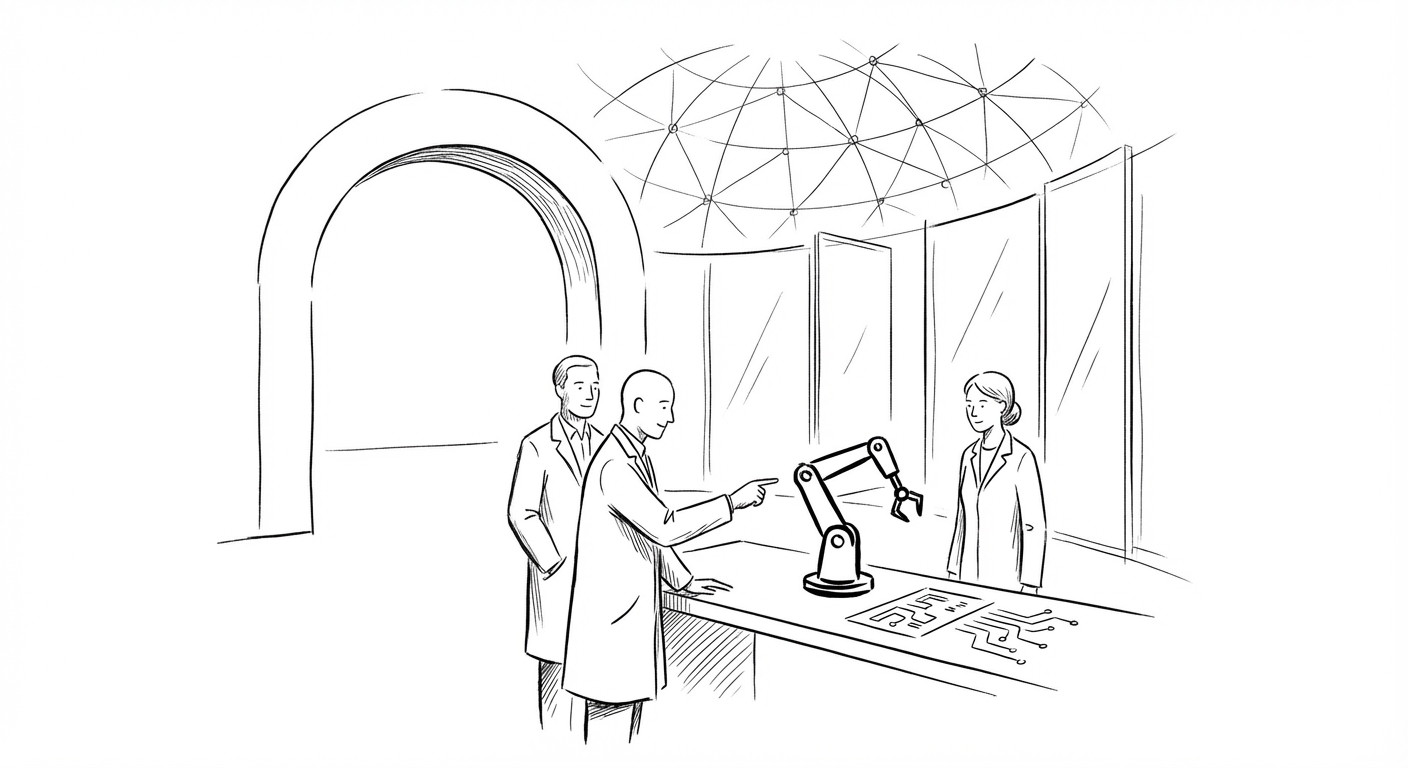
Meta has established a dedicated hardware team within its Meta Superintelligence Labs and appointed veteran engineer Rui Xu to lead the unit, marking a strategic expansion of the company's artificial intelligence ambitions beyond software.
The move involves engineers from Meta's Reality Labs prototyping MSL software on existing hardware platforms, according to company disclosures. The initiative suggests Meta is exploring AI-native devices that extend beyond its current smart glasses offerings, potentially accelerating development of personalized agents that operate seamlessly across multiple device categories.
The timing reflects broader industry momentum toward "local AI" architectures that prioritize on-device processing over cloud dependence. Google recently released its Gemma 4 model family under a permissive Apache 2.0 license, designed specifically to run on single graphics processing units for edge applications where latency and data sovereignty matter. Constellation Research analyst Holger Mueller noted the models suit "use cases and applications where low latency and digital sovereignty are high priorities."
(Meta's hardware expansion comes as the company faces intensifying competition in both consumer AI devices and enterprise infrastructure, with rivals ranging from Apple's rumored AI wearables to Amazon's custom Trainium chips gaining traction among cloud customers.)
The establishment of a hardware division inside Meta Superintelligence Labs represents a structural bet that advanced AI capabilities will require purpose-built silicon and form factors rather than relying solely on general-purpose computing platforms. Meta has previously invested heavily in custom AI training chips and virtual reality headsets through Reality Labs, but the new unit signals a convergence strategy linking hardware design directly to the company's most ambitious AI research efforts.
Meanwhile, the semiconductor landscape continues to fragment along geopolitical lines. Nvidia's H100 chip remains a market favorite despite newer H200 models offering superior performance, partly due to pricing dynamics and uneven export controls affecting Chinese markets. The H100 retails around $40,000, and Nvidia has sold millions of units over recent years, underscoring sustained demand for AI-optimized hardware even as architectural debates intensify across the industry.
Keywords
Sources
https://letsdatascience.com/news/meta-builds-hardware-team-for-superintelligence-15ba3a68
Exclusive reporting on Rui Xu hire and Reality Labs engineer involvement in prototyping MSL software on existing hardware platforms
https://siliconangle.com/2026/04/02/googles-new-gemma-4-models-bring-complex-reasoning-skills-low-power-devices/
Context on local AI trend with Google's Gemma 4 models designed for single-GPU edge deployment under permissive licensing
https://www.forbes.com/sites/johnwerner/2026/04/03/the-overwhelming-appeal-of-the-h100/
Market dynamics of Nvidia H100 chip demand, pricing at $40K, and geopolitical export control complexities affecting semiconductor trade
https://www.darkreading.com/cybersecurity-operations/rsac-2026-ai-dominates-community
Broader AI security and operational context from RSAC 2026 conference coverage highlighting industry-wide AI integration challenges