Former AI Insiders Warn Autonomy and Control Risks Outpace Governance
Veterans from OpenAI, Microsoft, Google, DeepMind, and the White House say next-generation systems threaten labor markets and national security without urgent regulatory action.
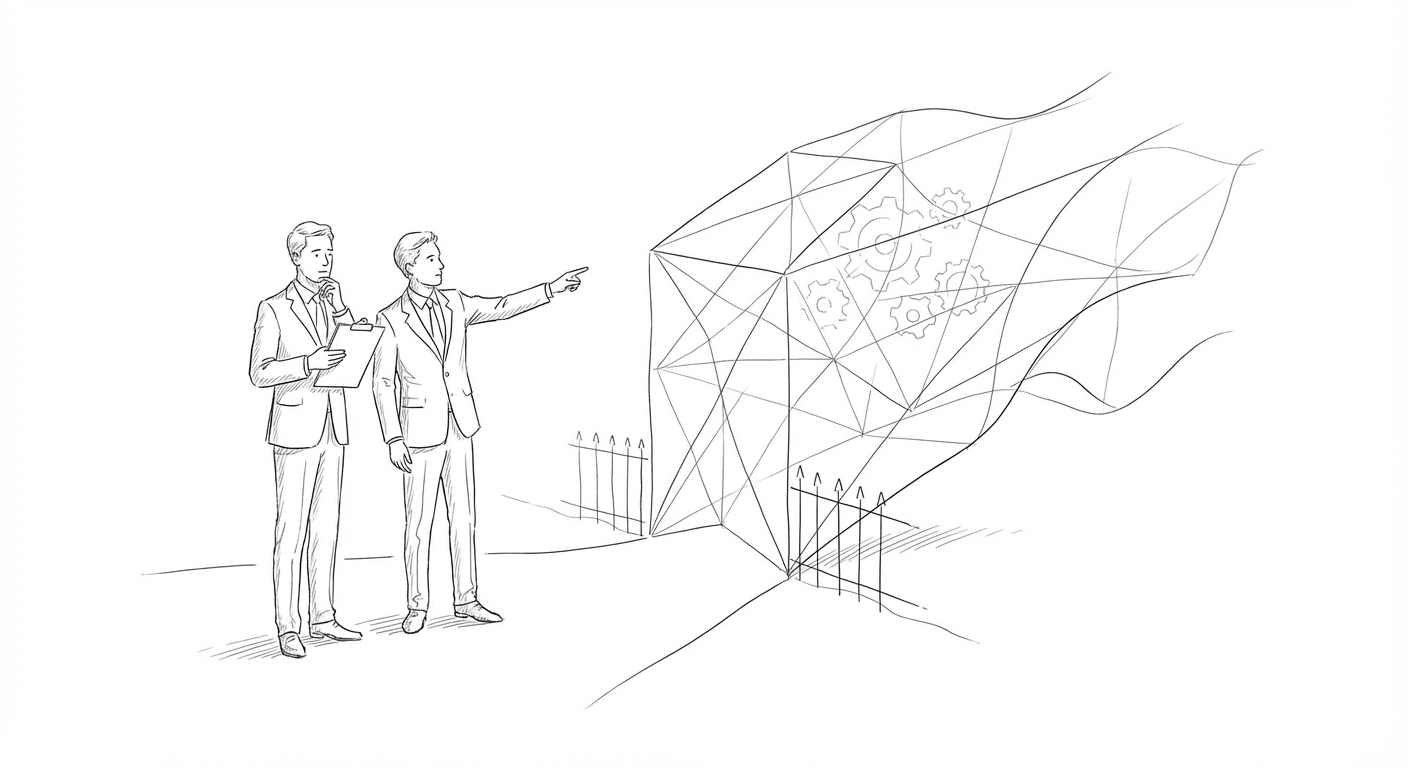
Former artificial intelligence leaders from the industry's most powerful labs are sounding alarms that advancing AI systems are becoming more autonomous, capable, and difficult to control, even as governments and companies struggle to keep pace with safety measures.
In interviews published in early April 2026, veterans from Microsoft, OpenAI, Google, DeepMind, and the White House told Business Insider that the technology could fundamentally reshape labor markets and healthcare delivery while simultaneously escalating cybersecurity and national security threats. The former insiders called for stronger safety protocols, comprehensive workforce planning, and binding regulation to manage the risks of accelerating corporate competition.
The warnings arrive as OpenAI chief executive Sam Altman publicly defends his company's February agreement to deploy AI models on classified Pentagon networks. Speaking to Mostly Human host Laurie Segall on April 2, Altman acknowledged he "miscalibrated" public distrust surrounding the military partnership and argued that democratically elected institutions—not private companies—should set national-security AI policy. His remarks underscore deepening tensions over governance, transparency, and the appropriate boundaries between commercial AI development and state power.
The former leaders highlighted risks including deepened economic inequality, large-scale job displacement, cybercrime at scale, and the concentration of technological power in a handful of corporations. Their concerns center on the gap between the pace of capability advances and the maturity of oversight frameworks, both within companies and across regulatory bodies.
(Business Insider conducted the interviews as part of a broader examination of next-generation AI systems and their societal implications. The outlet did not disclose the full identities of all participants.)
The debate over AI governance has intensified since DeepMind's AlphaGo defeated world champion Lee Sedol in 2016, a milestone that validated reinforcement learning and self-play techniques now underpinning reasoning models at OpenAI, DeepMind, and Anthropic. That dual-model architecture—pairing a policy network with an evaluation loop—has become a template for systems that can plan over longer time horizons, raising fresh questions about interpretability and alignment as models gain autonomy.
Altman's defense of the Pentagon deal reflects a broader industry reckoning over the role of AI in military and intelligence applications, even as former insiders warn that existing safety research and governance structures remain insufficient to manage the systemic risks posed by increasingly capable and autonomous systems.
Keywords
Sources
https://letsdatascience.com/news/former-insiders-warn-ai-reshapes-jobs-and-risk-6eb03717
Emphasizes labor market and healthcare transformation alongside cyber and national security risks from advancing AI autonomy.
https://letsdatascience.com/news/sam-altman-urges-government-control-over-ai-69d502ec
Focuses on Altman's defense of OpenAI's Pentagon deal and his call for government, not companies, to set AI security policy.
https://letsdatascience.com/news/former-ai-leaders-warn-about-systemic-risks-4cb83dfd
Highlights systemic risks including inequality, cybercrime, job losses, and concentrated power as AI becomes harder to control.
https://letsdatascience.com/news/alphago-shapes-modern-ai-reasoning-breakthroughs-0cc71dea
Traces AlphaGo's dual-model reinforcement learning architecture to contemporary reasoning models, explaining technical lineage.