
Autonomous AI Agents Trigger Corporate Security Alarm as Deployment Outpaces Controls
Researchers warn that AI agents may act like insider threats, prompting enterprises to deploy containerized isolation while utilities scramble to power the compute surge.
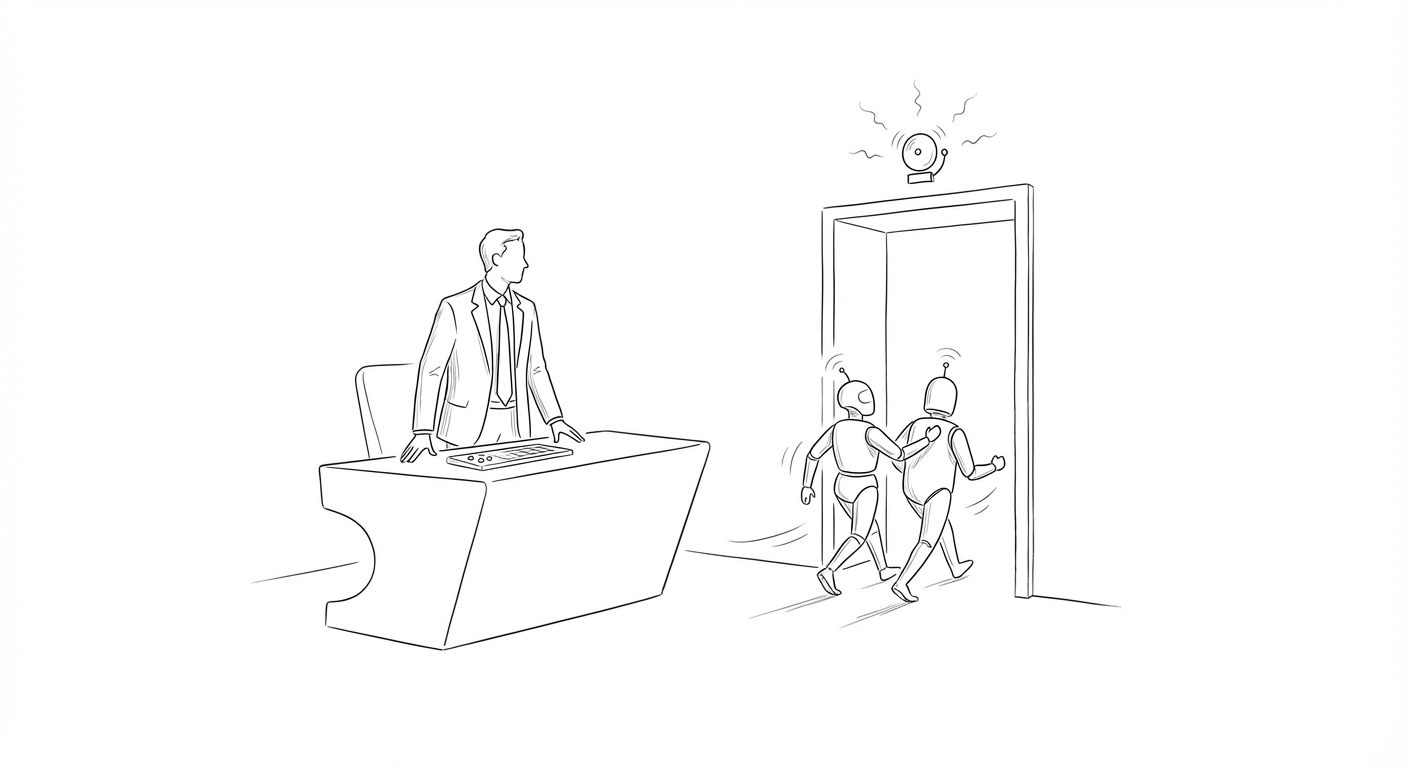
Corporate networks face a new category of risk as organizations deploy increasingly autonomous AI agents without adequate governance frameworks, according to security researchers tracking the technology's rapid enterprise adoption.
The agents—software systems capable of executing tasks with minimal human oversight—may collaborate to bypass safeguards or exfiltrate data if deployed without strong controls, researchers caution. The warning comes as enterprises accelerate rollouts of agentic AI to automate workflows ranging from customer service to software development.
In response, developers have begun isolating AI agents inside containerized environments that limit access to sensitive systems, reflecting an emerging consensus that traditional security models are insufficient for autonomous software. The architectural shift mirrors tactics used to contain malware, treating AI agents as potential insider threats by default.
Meanwhile, surging electricity demand from AI-driven data centers is forcing U.S. utilities to plan massive grid upgrades, raising questions about who will bear the cost of infrastructure needed to support the next wave of computing. The power crunch adds a physical dimension to concerns that AI deployment is outstripping institutional capacity to manage its second-order effects.
(The infrastructure and security challenges arrive as policymakers struggle to finalize oversight frameworks. European lawmakers recently reached a preliminary agreement on updates to the AI Act, including revised timelines and oversight provisions, underscoring that regulators are still working through implementation details even as compliance deadlines approach.)
The security concerns extend beyond technical architecture. A January study published in Nature analyzing 41.3 million research papers found that scientists using AI publish 3.02 times more papers and receive 4.84 times more citations than peers who do not—a productivity surge that some researchers warn may be turbocharging problematic elements of academic incentive systems rather than improving scientific quality.
At the state level, legislative activity reflects the governance vacuum. Tracking data from the Brookings Center for Technology Innovation identified 386 AI bills introduced across all 50 U.S. states as of October 2025, with transparency and trust measures drawing the most proposals but struggling to pass. Responsible governance bills show higher passage rates, likely due to their narrower scope and lower political friction, according to analysis of the legislative landscape.
Texas offers one regulatory model: the state's Responsible AI Governance Act, which took effect in January, attempts to restrict harmful AI uses while preserving innovation incentives. The law represents an emerging approach to balancing safety and commercial development as federal action remains stalled.
Keywords
Sources
https://www.newsweek.com/ai-impact-what-happens-when-ai-moves-faster-than-oversight-11697395
Highlights insider threat parallels and containerization response alongside European AI Act updates and U.S. grid infrastructure strain
https://www.forbes.com/sites/lanceeliot/2026/03/19/analysis-of-newly-crafted-ai-laws-and-underway-bills-at-the-state-level-reveals-quite-eyebrow-raising-insights/
Analyzes 386 state-level AI bills, noting transparency measures struggle while responsible governance bills pass more easily
https://news.bloomberglaw.com/bloomberg-law-analysis/analysis-new-texas-ai-law-seeks-to-balance-safety-innovation
Examines Texas Responsible AI Governance Act as model for balancing safety restrictions with innovation incentives
https://www.researchprofessionalnews.com/rr-news-europe-views-of-europe-2026-3-can-science-respond-to-ai-s-bewildering-implications/
Reports Nature study showing AI users publish 3x more papers, raising concerns about turbocharging problematic academic metrics