
AI Governance Lags as Autonomous Systems Infiltrate Industrial Operations
From grant-making to factory floors, AI agents are embedding faster than oversight frameworks can adapt, exposing gaps in identity control and human accountability.
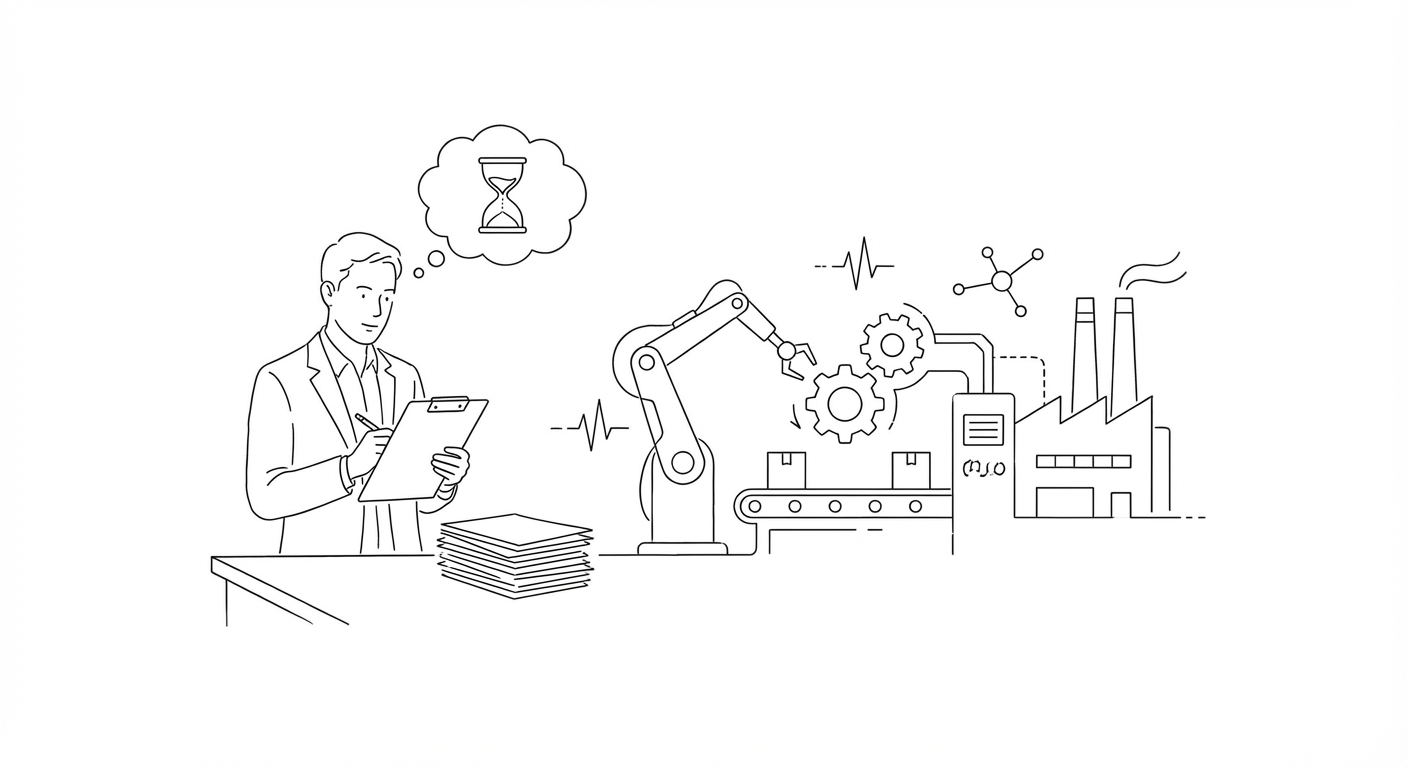
Artificial intelligence is moving from pilot programs to operational deployment across industries, but the speed of adoption is outpacing the development of governance structures designed to manage it. Organizations spanning philanthropy, manufacturing, and legal services are discovering that AI systems—particularly autonomous agents—are already operating within critical workflows, often without formal authorization or adequate safeguards.
The GitLab Foundation used AI to screen 800 grant applications in 30 minutes, a task that would have taken its three program officers hundreds of hours. Foundation president Ellie Bertani emphasized that while AI accelerates insight gathering, "the responsibility for making actual grant decisions still rests with people, rather than a machine." The foundation deployed what it described as "aggressive" AI screening to distribute $4 million in grants to nonprofits testing AI for economic opportunity programs.
Yet the rush to operationalize AI is exposing structural vulnerabilities. Industrial equipment operators report that AI may already be running on devices with access to operational technology systems, even without sanctioned rollouts. Security researchers have documented problems distinguishing AI agent actions from human behavior, revealing what they characterize as gaps in access control maturity, credential hygiene, and identity attribution.
Grant writers are using AI to draft proposals that more closely align with funder priorities, but warn of risks. One practitioner noted that AI "can add a lot of fluff" and make organizations "look bigger than you are," potentially causing nonprofits to overcommit beyond their actual capacity. The technology saves time but requires human oversight to prevent exaggerated claims about organizational capabilities.
(The White House released a framework in late March calling for a light regulatory touch on AI, outlining guiding principles for lawmakers but stopping short of prescriptive rules. Federal AI initiatives have expanded considerably as government explores cost-saving possibilities, though implementation details remain under development.)
The phenomenon of "shadow AI"—unsanctioned AI use spreading through organizations—is growing faster than governance mechanisms can address it. Industry observers note that leadership advantage will accrue not to those using the most AI, but to those who understand and control it. The gap between deployment velocity and oversight maturity represents what analysts describe as a blind spot in enterprise AI governance, particularly as autonomous agents proliferate across operational technology environments where safety and reliability are critical.
Manufacturing facilities that have relied on stable, traditional processes for decades are confronting disruption as AI systems integrate into production workflows. The challenge is not whether AI will transform industrial operations, but whether governance frameworks can mature quickly enough to manage systems that are already embedded and operating.
Keywords
Sources
https://www.ien.com/artificial-intelligence/video/22964566/ai-becomes-practical-key-takeaways-from-conexpo-2025
Focus on AI infiltrating factory floors and operational technology systems without formal authorization or adequate safety protocols.
https://www.philanthropy.com/news/can-ai-make-grant-seeking-easier-and-grant-making-more-refined/
GitLab Foundation's use of AI to screen 800 applications in 30 minutes, balancing efficiency gains against human decision-making responsibility.
https://www.law.com/thelegalintelligencer/2026/04/09/lets-give-em-something-to-talk-about-the-rise-of-ai-chatbots/
Legal sector exploration of AI chatbots and young lawyers' positioning to leverage AI tools in practice workflows.