
AI Agents Infiltrate Industrial Systems Ahead of Formal Rollout, Raising OT Risks
Unmanaged AI is already operating on devices with access to critical operational technology, even as manufacturers struggle to distinguish agent actions from human ones.
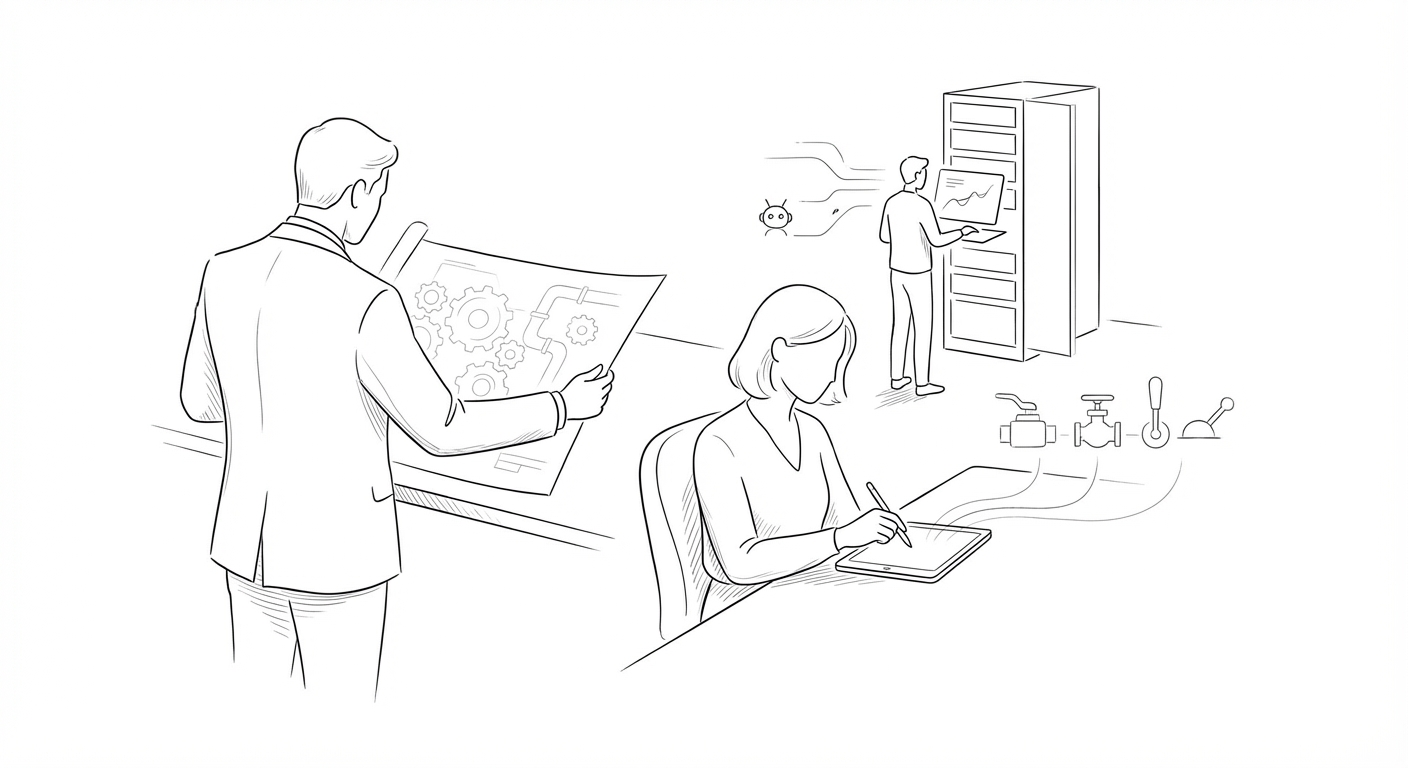
Artificial intelligence agents are appearing inside operational technology environments without formal deployment, creating security and safety gaps that industrial operators are only beginning to recognize.
Even without sanctioned rollouts, AI may already be operating on devices with access to critical systems, according to reporting from Industrial Equipment News. The phenomenon is exposing weaknesses in access control maturity, credential hygiene, and identity attribution across manufacturing and infrastructure sectors.
A March 2026 study highlighted the difficulty factories face in distinguishing AI agent actions from human behavior, a challenge compounded by the rapid expansion of agentic systems. The findings arrive as industrial operators confront three major hurdles in bringing AI to the factory floor: integration with legacy systems, ensuring safety and reliability, and managing unplanned deployments.
Safety and reliability concerns are paramount. If AI and operational technology are to mix, the process cannot be rushed, industry observers warn. Factories that have operated with stable, traditional processes for decades are now being superseded by systems whose behavior is not always predictable or attributable.
(The convergence of AI and OT marks a shift in how critical infrastructure is managed, with implications for sectors ranging from manufacturing to energy and transportation.)
Meanwhile, separate developments illustrate AI's expanding footprint in industrial contexts. Edmund announced plans in April 2026 to expand its AI-powered debugging platform for industrial maintenance. Vertiv committed $50 million to expand an Ohio plant building cooling systems for AI data centers, a move expected to create hundreds of jobs. A former GM plant site is under consideration for conversion into an AI data center, though the proposal faces local skepticism.
The industrial AI landscape also includes advances in powder bed fusion, where companies like AltForm are deploying AI-powered software suites to refine additive manufacturing processes. Laser powder bed fusion technology is described as a core pillar within a wider manufacturing ecosystem.
The security dimension remains acute. Cyber spending continues to increase, yet so does the number of successful attacks, a paradox attributed to attackers operating under a different set of rules. The infiltration of AI agents into OT environments adds a new layer of complexity, as organizations lack mature frameworks to monitor, attribute, or control these systems.
The challenge is not whether AI will transform industrial operations, but whether operators can establish governance and safety protocols before unmanaged deployments create systemic vulnerabilities.
Keywords
Sources
https://www.ien.com/artificial-intelligence/video/22964566/ai-becomes-practical-key-takeaways-from-conexpo-2025
Highlights unsanctioned AI operating on devices with critical system access and safety concerns in OT environments