
AI Adoption Exposes Gap Between Insight and Action, Prompting Governance Rethink
Organizations are discovering that AI accelerates analysis but often stalls at execution, raising questions about decision-making architecture and human oversight.
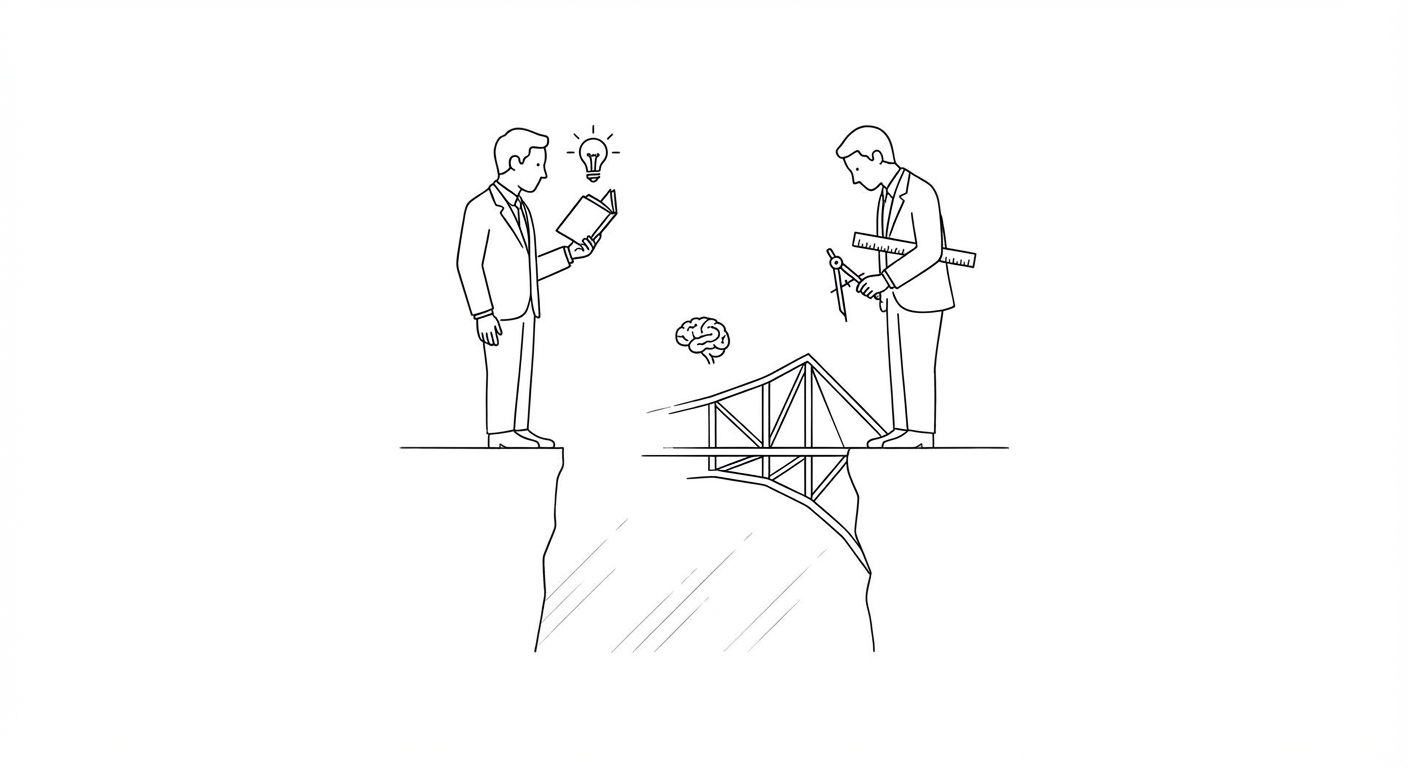
Artificial intelligence is changing not just the speed of corporate decision-making, but the fundamental architecture of how choices are made and executed inside organizations. That shift is prompting business leaders to confront a widening gap between analytical capability and operational follow-through.
Prof. Dr. Michael Gerlich, head of the Center for Strategic Corporate Foresight and Sustainability at SBS Swiss Business School, argued during a recent Future Talent Council webinar that the fix is not to slow AI adoption. Instead, business leaders should design organizations where human reasoning stays active rather than passive, retaining the capacity to interrogate AI-generated recommendations rather than accept them as given.
"What we need now is that organizations redesign how decisions are made, not only how data is analyzed," Gerlich said. "Rather than assuming that AI automatically improves decision quality, leaders must intentionally design processes that preserve human oversight and responsibility."
The concern is echoed across the enterprise software landscape. Sanjeev Mohan, principal at SanjMo, noted that companies have invested heavily in data platforms and AI, yet the last mile of translating governed data into everyday business outcomes remains largely manual. Snowflake CEO Sridhar Ramaswamy framed the challenge as a shift from systems of insight to systems of action, warning that AI agents increasingly operate without shared context, governance, or coordination.
"As adoption grows, a problem is emerging," Ramaswamy wrote. "These agents operate without shared context, governance, or coordination, making them fragmented and difficult to trust."
Snowflake's response is Project SnowWork, a research preview designed to act as a proactive AI collaborator that sits in the last mile between analysis and execution. The platform aims to put data-grounded AI agents on every desktop, enabling business leaders to move from question to action without filing requests with data teams or waiting days for reports.
Berlin-based Bounti is tackling a similar problem for multi-site physical businesses. The startup raised €4 million in seed funding led by Ventech to expand its AI platform for hospitality chains, gym franchises, and logistics companies. Rather than simply displaying dashboards, Bounti's system identifies revenue declines, links them to operational factors such as incomplete checklists or undertrained staff, and automatically triggers corrective actions.
"If you are, for example, Burgermeister with 30 locations, our AI identifies revenue declines and their causes, then automatically triggers actions to improve revenue at that location," said Ziar Khosrawi, co-founder and CEO of Bounti.
(The emphasis on execution over analysis comes as software companies face mounting pressure from investors. Public tech firms are trading at historically low multiples, with many down to 2x-5x revenue valuations typically associated with consumer packaged goods, compared to the 8-10x+ multiples seen historically. Three fears are driving the markdown: commoditization of software, AI's potential to replace entire categories of tools, and uncertainty about which companies will capture value in an AI-driven economy.)
The governance challenge is also reshaping executive roles. Trustpair, a vendor fraud prevention platform, elevated co-founder Simon Elcham to the newly created position of chief AI officer to formalize companywide AI governance. Elcham, formerly CTO, will lead cross-functional AI strategy alongside VP of People Céline Gallon. Rippling appointed Adrian Ludwig as chief security officer, positioning the hire as an effort to make security a driver of product velocity and customer trust, not just risk management.
The pattern suggests that AI's impact on business is less about replacing human judgment and more about forcing organizations to clarify where that judgment sits in increasingly automated workflows. Companies that treat AI as a pure productivity tool risk ceding decision authority by default. Those redesigning decision processes around AI may preserve strategic control while capturing efficiency gains.
Keywords
Sources
https://hrexecutive.com/the-subtle-art-of-decision-resilience-plus-hr-tech-news/
Focuses on decision resilience and the need to redesign organizational decision-making processes to preserve human oversight.
https://www.digitaljournal.com/business/snowflake-takes-aim-at-ais-follow-through-problem/article
Highlights the last-mile problem in enterprise AI and Snowflake's shift from systems of insight to systems of action.
https://techfundingnews.com/berlin-bounti-raises-e4m-ai-frontline-workers-physical-economy/
Covers Bounti's €4M raise and its approach to closing the gap between strategy and day-to-day work in multi-site businesses.
https://agfundernews.com/navigating-ais-impact-on-public-and-private-markets/
Examines investor fears driving down software valuations amid uncertainty about AI's impact on value capture.